15Cubic
yards
yards
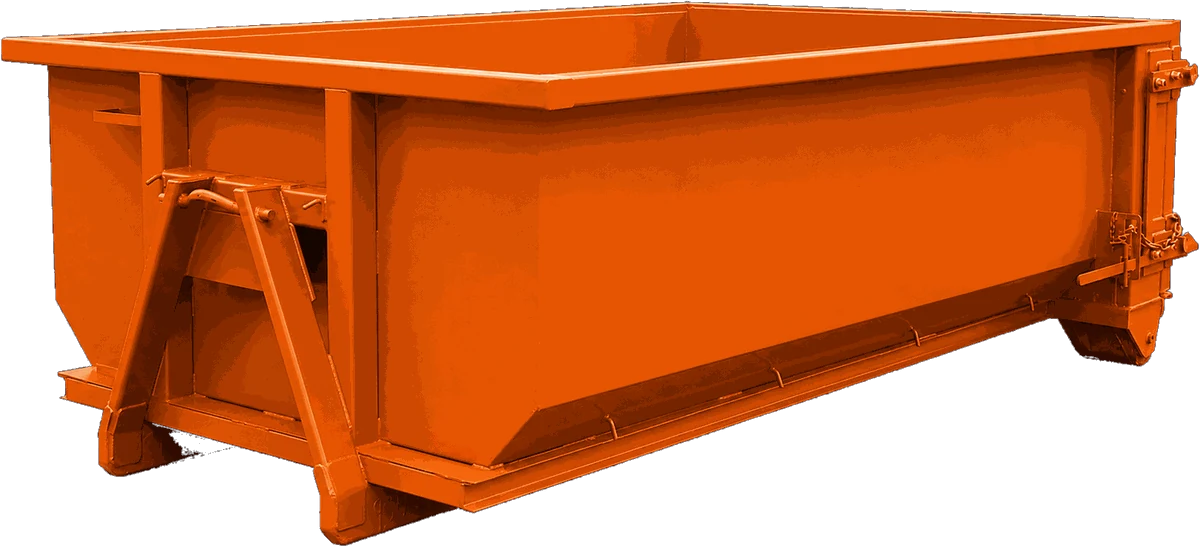
15-yard dumpster
Shorter walls suit limited cleanouts and compact remodeling jobs.
- Outside dimensions
- 16' L × 7.5' W × 4.5' H
Typical job types
- Basement cleanout
- Single-room renovation
- Brush and light yard waste
Cincinnati roll-offs / site delivery
Clear a house, strip a room, or load construction debris. Start with the address and material; we’ll price the Cincinnati-area job by phone.
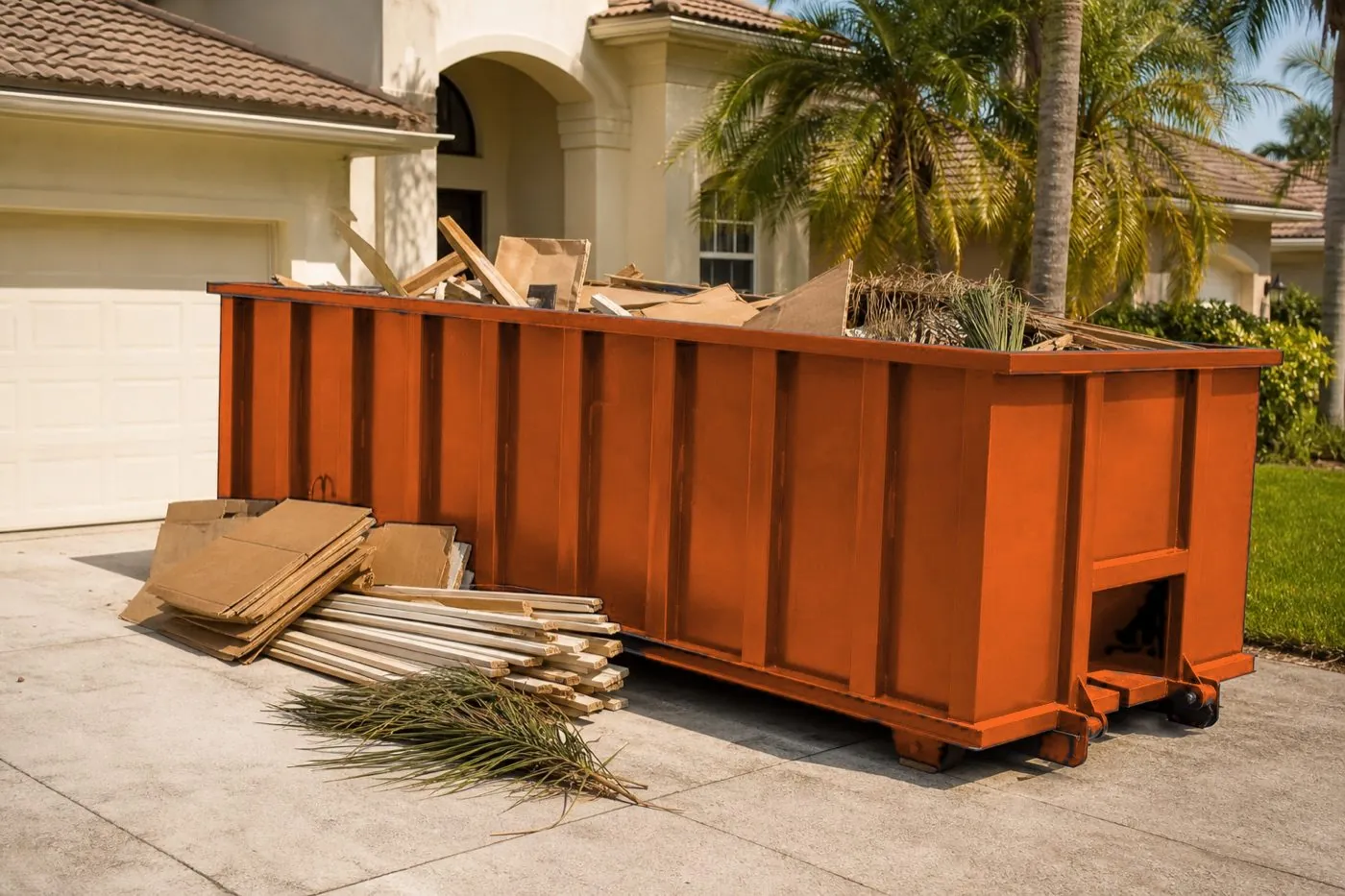
01 / SIZES
Tell us what is coming out and how much. The quote will pin down the container size and included weight.
Shorter walls suit limited cleanouts and compact remodeling jobs.
Typical job types
A longer box handles the mixed, bulky waste common to residential work.
Typical job types
Tall sides add capacity for extensive renovation and construction debris.
Typical job types
02 / WHAT'S INCLUDED
Know the schedule, load allowance, and placement plan up front.
The rental plan covers container delivery and the final removal.
The quote establishes the rental window before the truck is scheduled.
Included weight is tied to the debris described for the quote.
Discuss truck access, ground conditions, and the proposed drop point before delivery.
Get the job terms. Keep the address, load material, and requested dates ready.
Confirm at (513) 506-3038 →
03 / PROCESS
The address, debris, and requested date drive the container and delivery plan.
Give the Cincinnati-area address, material, target date, and estimated volume. Those facts narrow the size.
Set aside a firm, level area and an open truck approach. Driveway placement still depends on the actual site.
Use the box only for approved debris and keep the load under the top rail. Call when it is ready to haul.
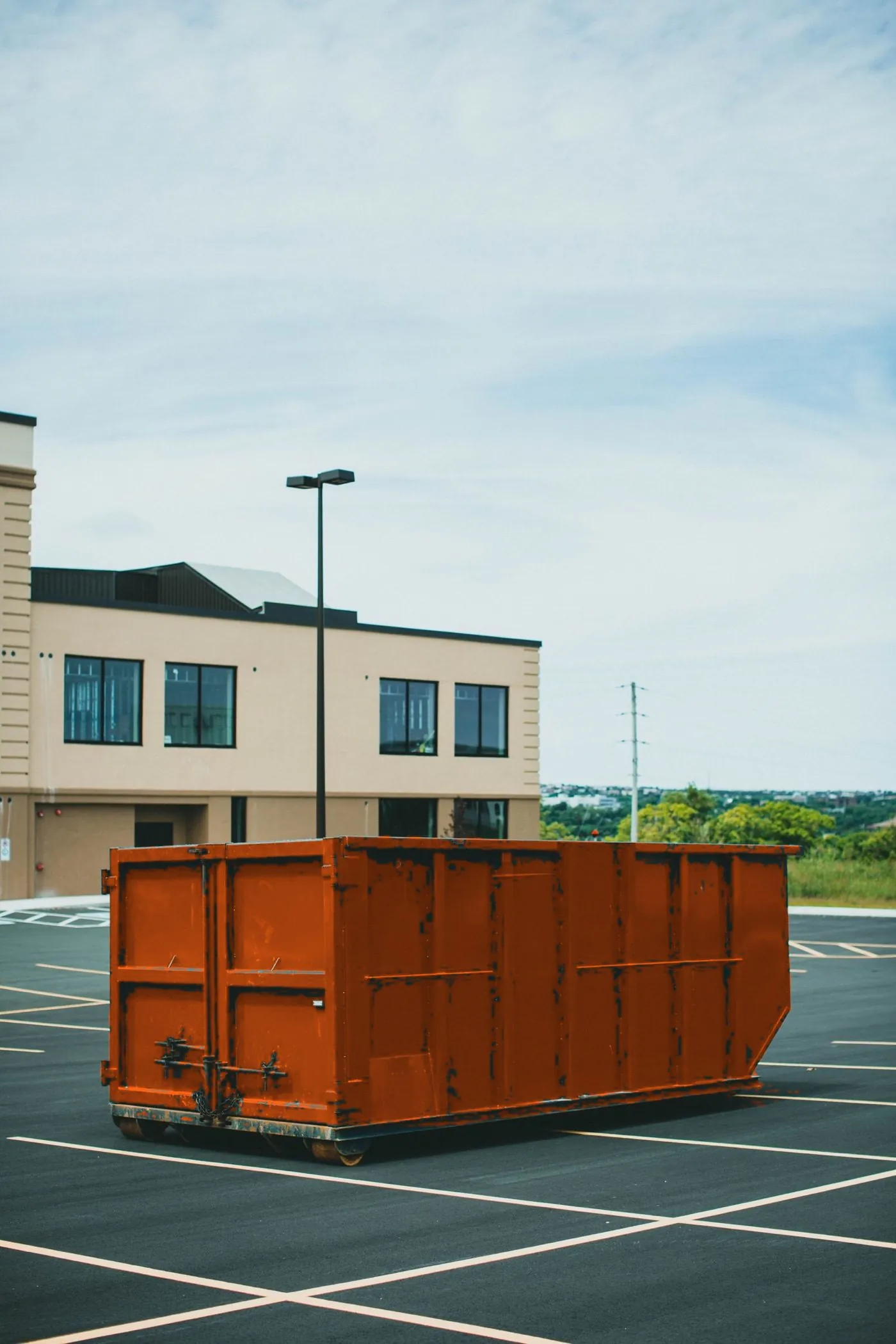
04 / SERVICE AREA
Dispatch depends on the exact site, requested box, and date. Call to verify coverage in Hamilton County or a nearby listed city.
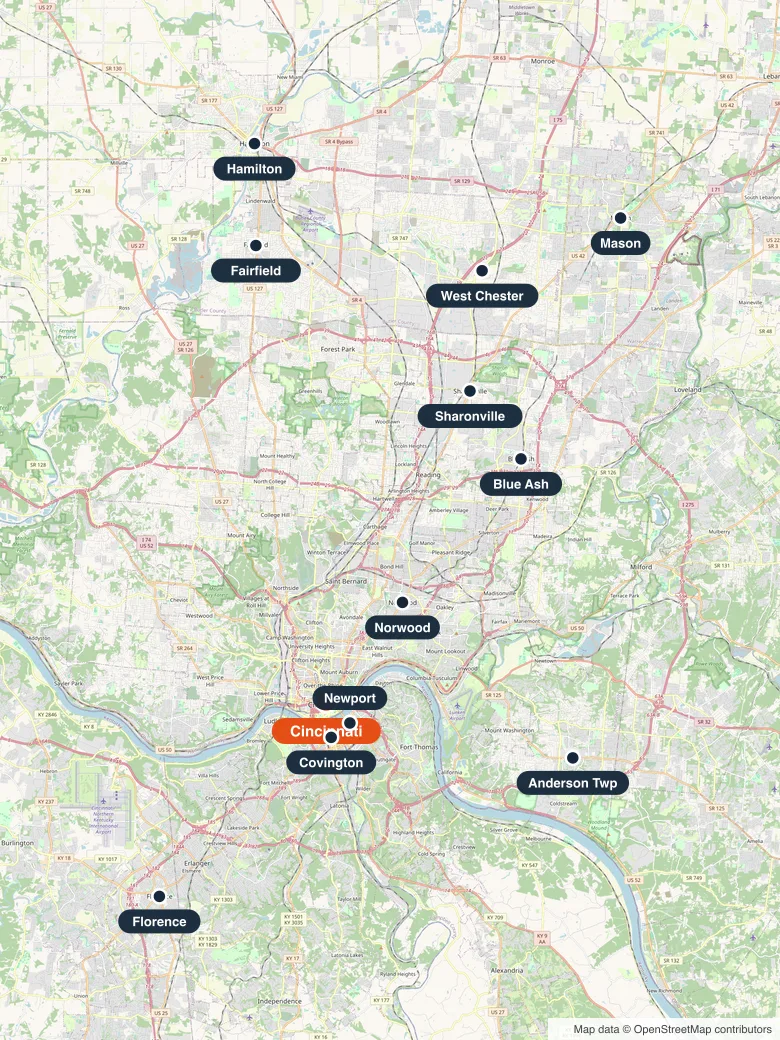
Map data © OpenStreetMap contributors
Coverage check / 12 listed cities
Outside the list? Call (513) 506-3038 with the exact job address.
05 / PLACEMENT
Cincinnati has a specific rule for roll-offs in public right-of-way.
Start with a firm private surface that gives the truck a straight approach. Check the usable width at gates and between parked cars. Look up for wires and branches. Look down for soft pavement, drainage inlets, steep changes in grade, and utility covers. The container position should leave the garage, sidewalk, and shared access working for the entire rental.
Decide where the rear door will open and how material will reach it. A convenient loading route reduces lifting and keeps debris out of traffic areas. It also prevents the crew from changing the placement after the box arrives.
The City of Cincinnati says a construction-and-demolition roll-off may sit temporarily in public right-of-way only after an open-street permit is obtained through the Department of Transportation and Engineering. That applies to the public space, not simply to a container located somewhere near a street.
If the proposed box reaches into a curb lane, sidewalk area, alley, or other city right-of-way, resolve the permit before delivery. Provide the exact address and footprint. Leave room for people walking, vehicles turning, and access to nearby properties. A permit question discovered on delivery day can stop the placement even when the container size is otherwise right. The full breakdown — including Northern Kentucky rules — is on our dumpster permit page.
Cincinnati’s right-of-way manual requires containers, dumpsters, and roll-off boxes in city right-of-way to show the company name, a 24-hour phone number, and the container number on two opposite sides. It also requires specified retroreflective markings and says the city may refuse or revoke permits for noncompliant containers.
Ask about those details when public placement is part of the request. Do not assume any available box can be dropped in a permitted location. The equipment, location, and approved traffic setup have to agree.
The listed area includes Cincinnati, Norwood, Blue Ash, Sharonville, Fairfield, Hamilton, Mason, West Chester, and Anderson Township. It also reaches Covington, Newport, and Florence in Northern Kentucky. Cincinnati’s open-street rule does not answer the permit question for every one of those places.
Give us the full address and name the proposed position. We separate the rental question from the local-approval question. The container size and material terms belong in the quote. The authority controlling a public street or sidewalk decides whether that space can be used.
Sort before loading begins. Household contents, renovation debris, roofing, yard material, and dense masonry do not travel under one universal set of terms. Set aside liquids, batteries, tires, appliances, sealed drums, automotive products, and chemical-labeled items. Ask about anything uncertain while it is still outside the box — our materials guide covers the accepted and banned lists in detail.
A roll-off is useful when the job creates material over several work sessions. It may be excessive for a small sorted load that already fits a safe self-haul. It may also be a poor fit where no private position exists and public-space approval cannot be secured. Call (513) 506-3038 with the address, debris, estimated volume, access limits, and dates. We use those facts to quote the work without turning a permit assumption into a delivery problem.
For a city right-of-way location, leave the required identification and reflective markings visible after loading starts. Do not stack material against the outside of the box or cover the markings with tarps and job signs. The permit applies to an occupied public location for the full placement period, not only to the moment the empty container arrives.
We carry the approved Cincinnati position into the delivery notes. The curb lane, sidewalk edge, loading door, and reflective sides must remain clear enough to match that plan. A container that shifts into walking or turning space creates a different public-space condition. Stop loading and correct the site plan through the proper channel instead of treating an open-street permit as permission for any nearby footprint.
06 / FAQ
Every order turns on the load, drop point, and schedule.
Your price is based on the box size, job address, material, rental period, and loaded weight. The quote spells out the included terms before booking. Call with the project facts for pricing tied to your Cincinnati-area job.
Use the 15-yard box for tighter cleanouts, the 20-yard box for many household projects, and the 30-yard box for larger renovation or building loads. Describe the material and volume when you call so the size can be checked before delivery.
Most flat, firm, accessible driveways can support a residential placement. The final spot depends on grade, pavement condition, overhead clearance, and the truck approach. Review those conditions by phone before the delivery date.
Permit rules vary by placement and municipality. When a container will sit in a street or public right-of-way, check with the City of Cincinnati or your local municipality before delivery; Northern Kentucky cities have their own rules. A box kept entirely on private property may be treated differently.
Typical loads may include household items, furniture, remodeling debris, construction waste, shingles, and yard material. Chemicals, fuels, batteries, tires, wet paint, cooling appliances, and medical refuse require another disposal route. Confirm electronics, mattresses, and any uncertain material before putting it in the box.
Same-day or next-day delivery may be available based on container availability, the address, and when the request is received. Reserve earlier when possible, particularly around weekends and high-demand project dates.
A dumpster stays for an agreed rental window while you handle the loading. Junk removal usually brings a crew for a single loading visit, with cost commonly tied to occupied volume and labor. Choose based on whether you need working time or hands-on removal.
“Storm cleanup with mostly branches. They explained what counted as mixed load versus clean fill before I booked, so no surprise upcharge.”
“We use them for our retail space during remodels. Drop-off and pickup happen in the window they quote, every time.”
“Good box, good driver. The only snag was a one-day delay on drop-off because of a county permit hold, and they were up front about it.”